Bathing Without Stepping Over High Walls
Walk-In Shower Conversions in Broken Arrow for homes where bathtub entry creates safety concerns
A bathtub wall that measures fourteen to sixteen inches high becomes a real hazard when balance or flexibility declines. Sound Contracting removes traditional tubs and replaces them with low-threshold showers that allow you to step in safely, reducing fall risk and making daily bathing more manageable. Each conversion is built with sturdy entry points, practical layouts, and finishes that hold up to daily use while keeping the space comfortable for older adults who want to remain independent at home.
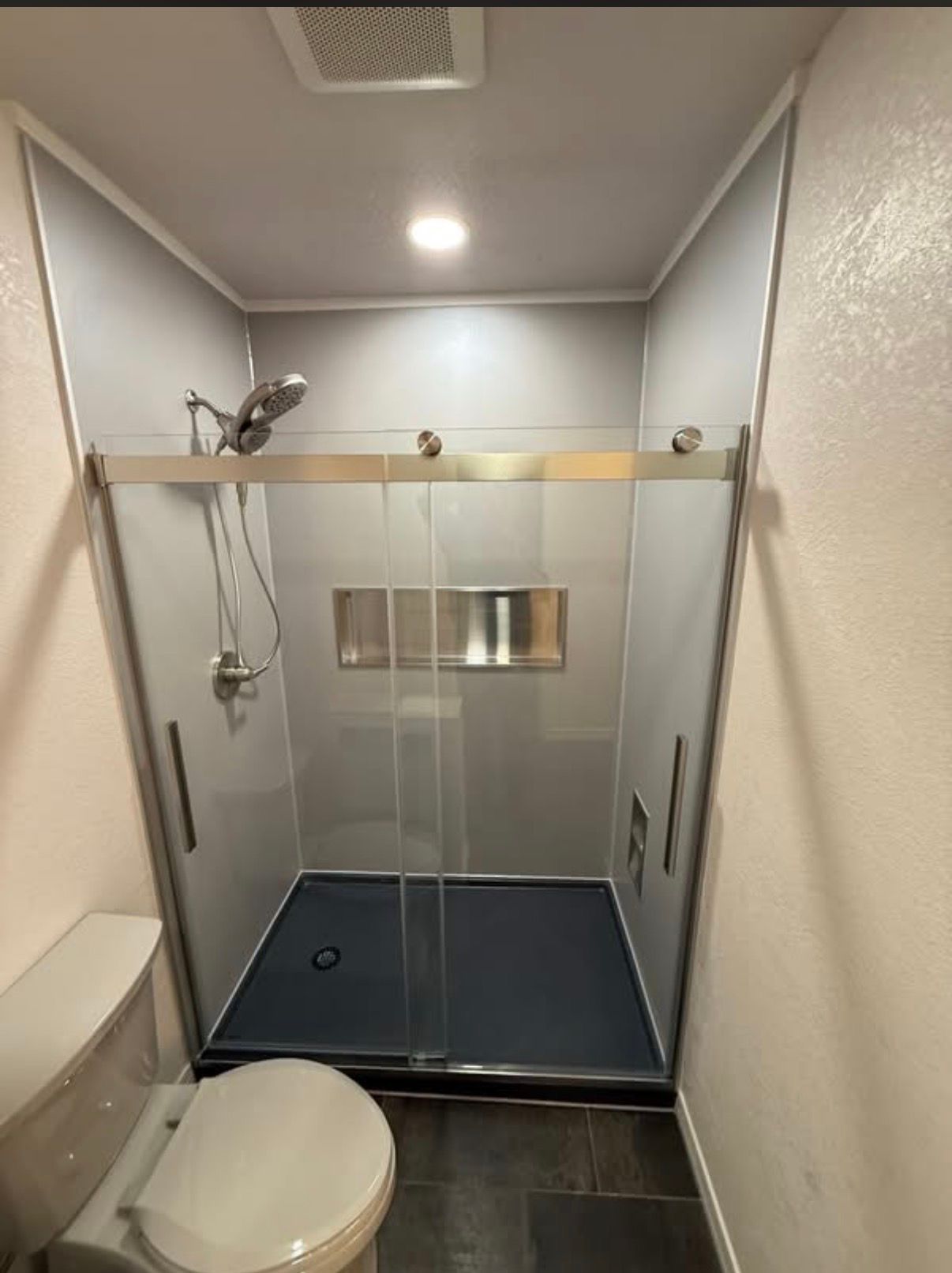
The conversion process involves removing the existing tub, reinforcing the subfloor to support the new shower base, and installing a low-profile threshold that typically sits less than two inches above the floor surface. Walls are fitted with water-resistant panels, fixtures are positioned within easy reach, and drainage is routed to prevent standing water that could create slip hazards.
Schedule a home assessment to review your current bathroom layout and discuss threshold options.
What Proper Shower Access Requires
The threshold height matters more than most people realize—a one-inch lip allows easier entry than a four-inch curb, especially when moving aids like walkers are involved. The shower floor itself uses slip-resistant materials with textured surfaces that provide traction even when wet, and the entire base is sloped gently toward the drain to keep water moving without creating pooling areas where feet might slide.
Once the conversion is finished, you step into the shower without lifting your leg over a tall edge, the textured floor grips your feet securely, and the layout gives you room to move or position a seat without feeling cramped. The fixtures stay within arm's reach, and the modern finishes look clean without requiring the deep scrubbing that older tub surrounds often demand.
These conversions also include decisions about door type—frameless glass, hinged panels, or no door at all for wheelchair access—and whether to add built-in seating or fold-down benches. The approach depends on your specific mobility needs and how much space the bathroom offers.
Homeowners in Broken Arrow often ask about the details before starting a conversion, especially when the goal is long-term safety and usability.
Questions About Walk-In Shower Projects
What happens to the plumbing when the tub is removed?
The existing drain and supply lines are rerouted to fit the new shower layout, and the subfloor is checked for any water damage or structural issues before the new base is installed.
How low can the threshold actually be?
Most walk-in conversions use a threshold between half an inch and two inches, with barrier-free options available that sit flush with the floor when the subfloor allows for proper drainage slope.
What type of flooring works best inside the shower?
Textured acrylic or fiberglass bases are common because they resist mold, dry quickly, and provide grip without feeling rough underfoot.
Why do some conversions include grab bars and others do not?
Grab bars are often added based on current or anticipated mobility needs—they're anchored into wall studs behind the panels to support body weight safely during entry and exit.
How does Broken Arrow's hard water affect shower materials?
Mineral buildup from local water can leave white film on glass and fixtures, so choosing non-porous wall panels and handheld showerheads with anti-clog nozzles reduces maintenance over time.
Sound Contracting builds each conversion with the understanding that bathroom safety directly affects how long you can live independently in your own home. Request a project consultation to review your current tub setup and discuss entry options that fit your needs.