
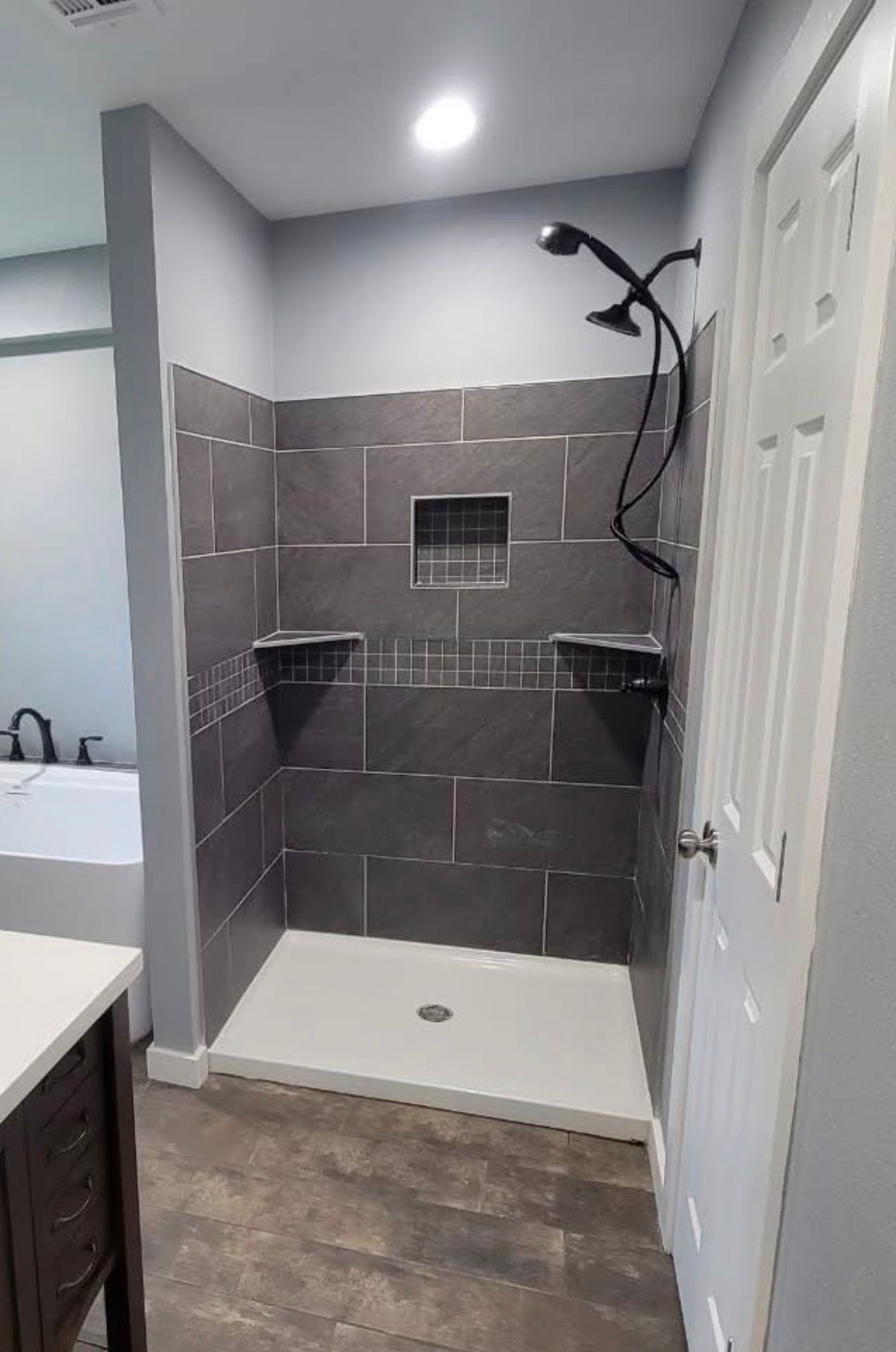
Showers Finished With Custom Tile
Tile & Stone Walk-In Showers in Wagoner for Bathrooms Needing Durable Finishes
Sound Contracting installs tile and stone walk-in showers for homeowners in Wagoner who want water-resistant finishes that last decades without warping or fading. Your current shower may have acrylic panels that yellow over time or grout lines that turn black from mold, and you want a surface you can scrub without worrying about cracking. Tile and stone provide a hard finish that resists moisture, and you choose from ceramic, porcelain, marble, or natural stone in colors and patterns that match your vanity or flooring.
The installation starts with waterproof membrane applied over cement board or mud-set pans to block water from reaching studs or subfloors. You select tile size, grout color, and layout patterns such as subway stacks, herringbone, or mosaic accent walls. Marble and natural stone bring luxury appeal with veining and unique textures, but they require sealing to resist staining from soap and shampoo. Porcelain and ceramic tiles are denser and less porous, making them easier to maintain in high-use showers. Grout is sealed after curing to prevent mildew and discoloration, especially in Wagoner humidity.
Contact Sound Contracting to review tile samples, layout options, and waterproofing details for your walk-in shower project in Wagoner.
How Tile and Stone Hold Up Over Time
Your shower walls and pan receive a waterproof membrane that overlaps seams and corners by at least two inches, then tile is set with thin-set mortar rated for wet areas. You choose grout joint width based on tile size, with larger tiles using narrower joints and mosaics requiring wider spacing. Accent walls or niches use contrasting tile colors or mosaic patterns to break up solid fields and add visual interest without increasing cost significantly.
After installation, you step onto a tile pan that feels solid underfoot, with grout lines that channel water toward the drain. Walls clean easily with spray cleaner, and sealed grout resists staining for years before needing reapplication. Marble or stone surfaces show natural variation in color and veining, so no two showers look identical.
Tile pans are sloped at one-quarter inch per foot to prevent pooling, and the waterproof membrane extends six inches up walls from the pan surface to protect the transition zone. Natural stone requires annual sealing to block moisture from penetrating pores, while porcelain and ceramic tiles need only grout sealer reapplied every two to three years. Mosaic tiles create more grout lines, which means more maintenance but also better slip resistance. Tile and stone showers do not include prefabricated bases unless you combine them with a tile surround.
Homeowners in Wagoner often ask what tile materials work best in showers, how to prevent grout from turning black, and whether natural stone requires more upkeep than porcelain.
Questions Homeowners Ask About Tile Showers
Sound Contracting applies waterproof membrane, sets tile to manufacturer standards, and seals grout once it cures. Get in touch to start planning your tile and stone walk-in shower in Wagoner.