
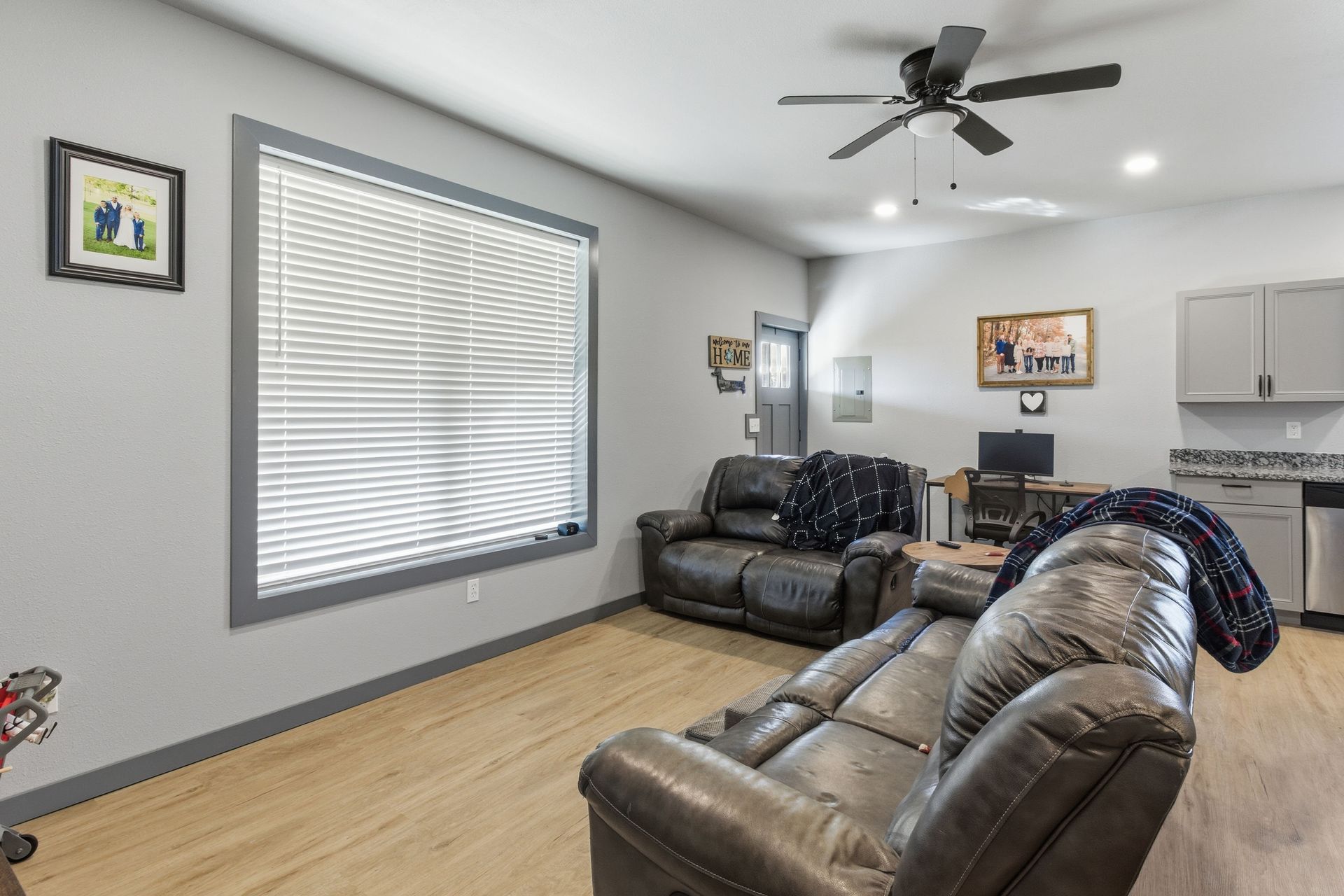
Add Living Space That Functions Independently
Sound Contracting designs and builds accessory dwelling units in Broken Arrow for family housing, rental income, and private workspaces.
You need more usable space on your property, but adding onto your main house does not fit your layout or budget, and that is where an accessory dwelling unit makes sense. An ADU is a fully functional living structure built on the same lot as your primary residence, offering a separate entrance, kitchen, bathroom, and sleeping area. In Broken Arr ow, homeowners use these units to house aging parents, adult children returning home, long-term renters, or to create private office space that stays separate from household activity. Sound Contracting handles the planning, permitting, and construction phases so the finished unit meets local codes and functions as intended.
The build process begins with site evaluation and zoning verification to confirm what can be built on your lot, then moves into design, foundation work, framing, and system installation. You work with Sound Contracting to choose floor plans, finishes, and utility configurations that align with how the space will be used. The structure is built with the same materials and methods used in traditional home construction, which means proper insulation, load-bearing walls, and durable exterior finishes that hold up in Broken Arrow weather.
If you are ready to talk through what an ADU could look like on your property, contact Sound Contracting to start the planning process.
What Goes Into Building a Separate Living Unit
Constructing an ADU in Broken Arrow starts with verifying setback requirements, utility access, and any restrictions tied to your property or neighborhood, which Sound Contracting coordinates before breaking ground. Once permits are secured, foundation work begins, followed by framing, roofing, and installation of electrical panels, plumbing lines, and HVAC systems sized for the square footage. Exterior siding, windows, and doors are chosen to match or complement your main home, and interior finishes include flooring, cabinetry, countertops, and fixtures based on your preferences and the unit's purpose.
After construction is finished, you will notice that the unit operates as a standalone residence with its own climate control, water heater, and breaker panel. Cabinet doors align properly, plumbing fixtures drain without hesitation, and the layout allows for comfortable daily movement even in a compact footprint. Insulation keeps the space warm in winter and cool in summer without excessive energy use, and windows are positioned to provide natural light and ventilation throughout the day.
This type of project requires coordination with city inspectors at multiple stages, and Sound Contracting manages those steps as part of the timeline. The work includes all structural, mechanical, and finish components needed to make the ADU livable, but does not cover landscaping, fencing, or site grading beyond the immediate building area. The goal is a finished unit that functions independently and holds up under regular use without requiring constant repairs.
Building an accessory dwelling unit involves zoning rules, utility connections, and decisions about layout and purpose, so here are answers to the concerns that surface most often when homeowners first look into ADUs.
Questions That Come Up Before Starting the Build
Sound Contracting has built accessory dwelling units across Broken Arrow for homeowners who need flexible, functional space that operates independently from their main residence. If you are considering an ADU and want to discuss layout options, site requirements, or budget expectations, reach out to schedule a consultation.