Showers That Replace Unused Bathtubs
Tub To Shower Conversions in Broken Arrow for homeowners ready to remove hard-to-enter tubs
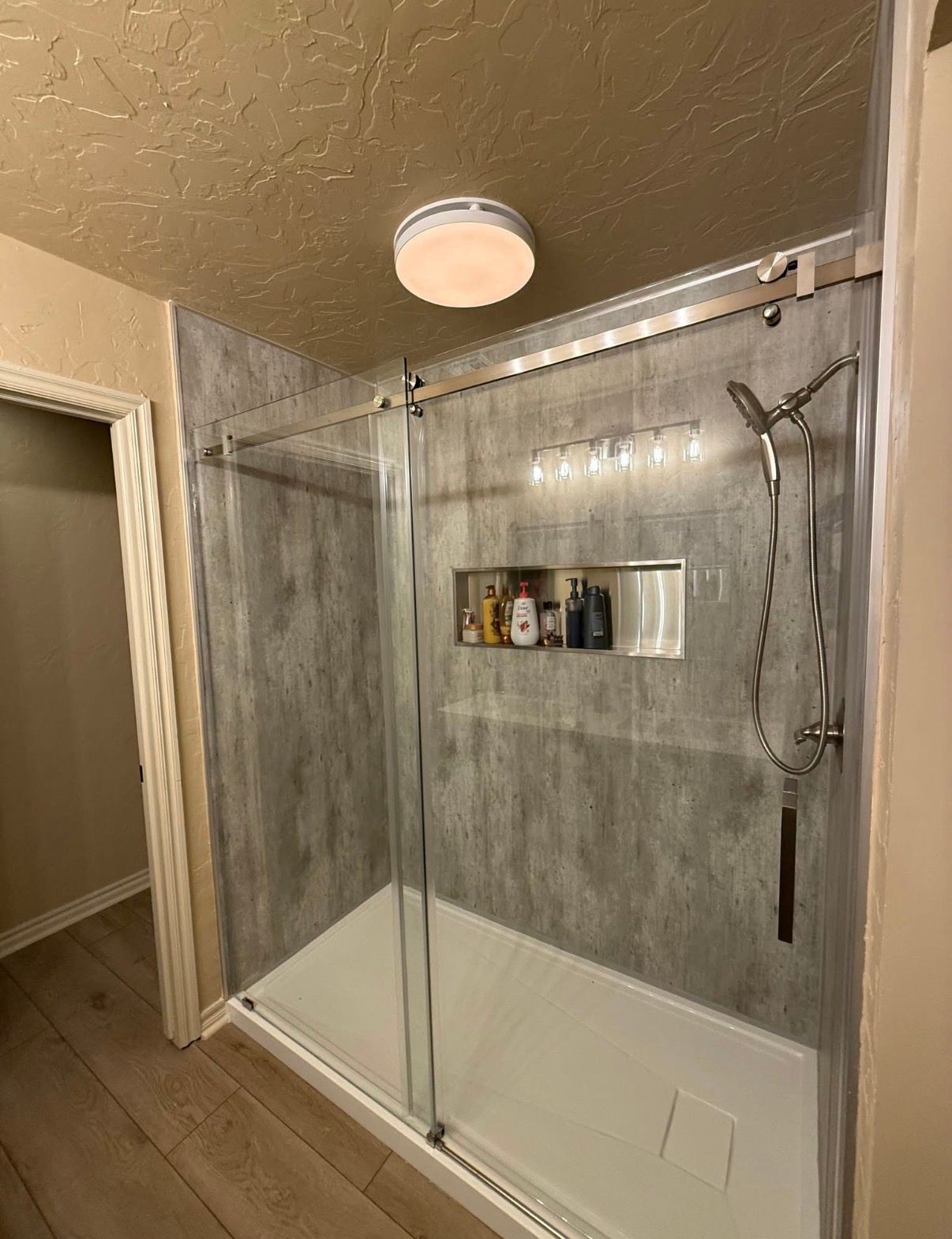
Most adults stop using bathtubs years before they remove them, leaving a fixture that takes up space and creates a climbing hazard every time they shower. Sound Contracting pulls out the old tub, reinforces the floor structure, and installs a walk-in shower with a low threshold, durable wall panels, updated fixtures, and slip-resistant flooring that makes bathing simpler and safer. Each conversion is built to fit the existing bathroom footprint, so the change improves function without requiring a full remodel or expansion.
The process involves disconnecting plumbing, removing the tub and surrounding tile or panels, checking the subfloor for damage or rot, and then installing the new shower base with proper slope toward the drain. Walls are fitted with waterproof panels that resist mold, and fixtures are positioned based on how you'll use the space—whether standing or seated, with handheld or fixed showerheads, and with or without grab bars for added support.
Schedule a bathroom assessment to review your tub setup and discuss shower layout options.
What You Notice Once the Tub Is Gone
The new shower base sits much lower than the old tub wall, typically just an inch or two above the floor, so stepping in no longer requires balance or leg strength. The space inside feels larger because the shower pan extends into the area the tub once occupied, and the modern panels clean faster than grout lines that collected mildew along the tub surround.
After the conversion finishes, you step into the shower without gripping the wall for support, the textured floor prevents slipping even with soap and water underfoot, and the layout gives you room to move comfortably without bumping into fixtures. The updated controls sit within easy reach, and the entire space looks cleaner and more current than the outdated tub setup it replaced.
Conversions also involve choosing between framed and frameless glass doors, whether to include a built-in corner seat or leave the floor open, and what type of showerhead works best for your routine. The goal is a shower that fits your daily needs rather than a generic replacement that ignores how you actually bathe.
Before removing a tub, most people want to know what the process involves and how the finished shower will function day to day.
What Homeowners Usually Ask About Conversions
What happens to the floor where the tub sat?
The subfloor is inspected for water damage, mold, or rot, and any compromised sections are replaced before the new shower base is installed to ensure a stable, level foundation.
How long does a tub-to-shower conversion take?
Most projects are completed in three to five days, depending on whether the subfloor needs repair and how complex the plumbing rerouting becomes once the tub is removed.
What materials hold up best in shower walls?
Acrylic or fiberglass panels resist mold better than tile and grout, require less maintenance, and install faster because they come in large sections that cover the walls with fewer seams.
Why do some showers have seats and others do not?
Built-in seats are added when sitting during bathing is preferred or anticipated, and they're typically molded into the shower base or mounted on the wall with anchors that support full body weight.
How does Broken Arrow's water quality affect shower fixtures?
The area's hard water can clog showerheads with mineral deposits over time, so conversions often include fixtures with anti-clog nozzles or filters that reduce buildup and extend the life of the hardware.
Sound Contracting builds each conversion with attention to threshold height, floor traction, and fixture placement, so the finished shower works for your household both now and as mobility needs change. Reach out to discuss your current tub and what layout would improve your daily routine.