Showers Built Without Entry Obstacles
Barrier-Free Showers in Broken Arrow for homes requiring step-free bathroom access
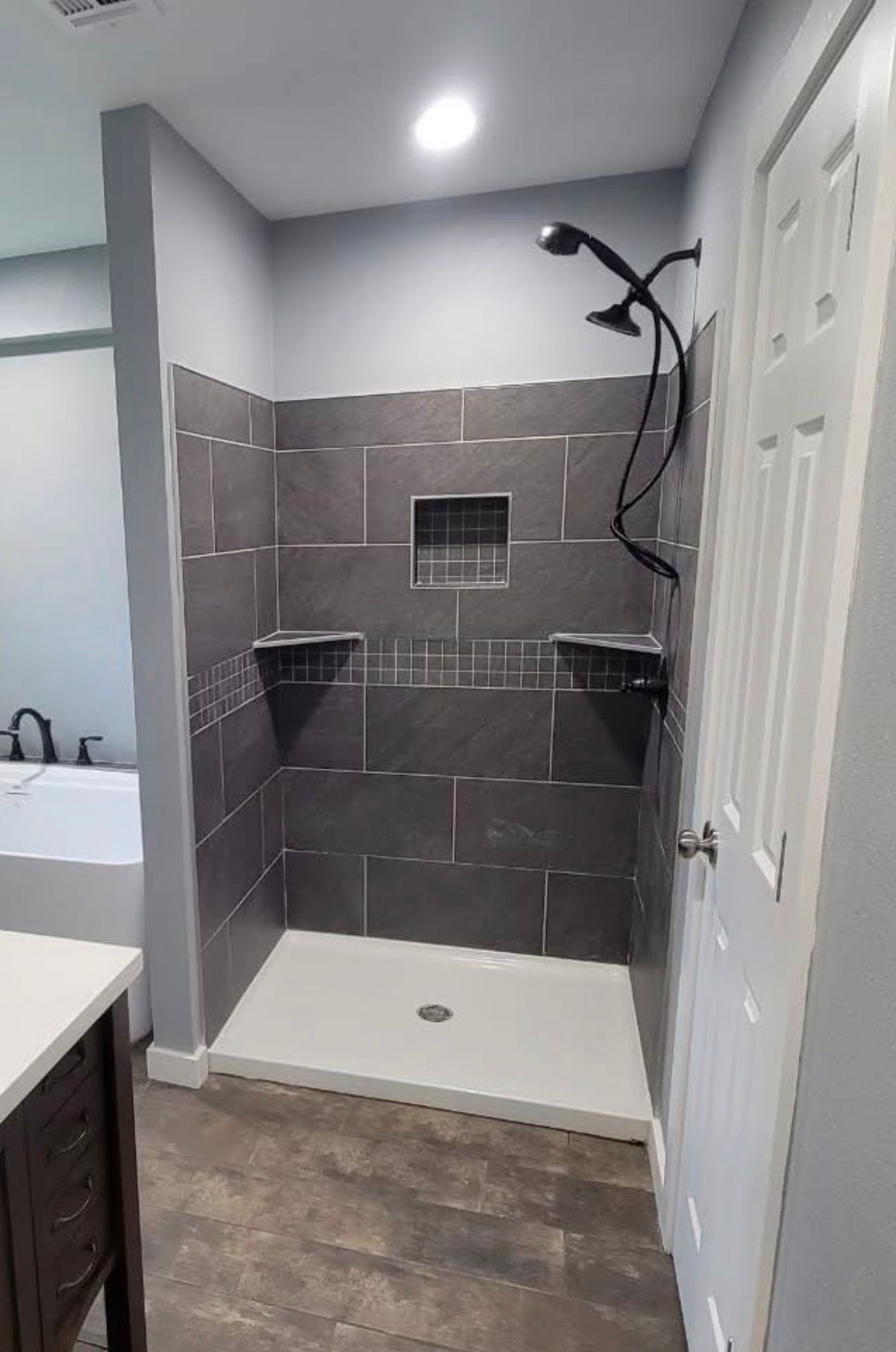
A barrier-free shower eliminates the curb or threshold entirely, allowing entry without lifting your feet or navigating a step, which is critical when wheelchairs, walkers, or balance limitations are involved. The shower floor sits flush with the bathroom floor, achieved by recessing the drain and shower pan into the subfloor structure, and the entire surface slopes gently toward drainage without creating a lip at the entry point. Sound Contracting builds these showers with slip-resistant bases, properly positioned fixtures, and durable wall panels that support long-term accessibility while maintaining a clean, modern appearance in your Broken Arrow home.
Installation requires careful attention to the subfloor—the structure must allow enough depth to recess the shower pan and drainage system while maintaining proper slope for water flow. This sometimes involves lowering floor joists or building up the surrounding bathroom floor slightly to create the necessary grade. Waterproofing extends beyond the shower area to prevent leaks, and the drain is positioned to handle water flow efficiently without pooling near the entry.
Request a structural assessment to determine whether your bathroom floor can accommodate a flush-entry design.
The Difference Between Flush Entry and Low Threshold
A truly barrier-free shower has zero vertical lip between the bathroom floor and the shower floor—you roll or step straight in without any change in height. This requires precise sloping of the shower floor toward the drain, often at a one-quarter inch per foot grade, and sometimes a linear drain along the entry edge to catch water before it spreads into the main bathroom. The slip-resistant surface provides traction across the entire wet area, and the layout accommodates mobility aids without tight corners or narrow passages.
Once the shower is finished, you enter without watching for a step or curb, wheelchairs roll directly onto the shower floor, and the surface drains quickly without leaving standing water that creates additional slip hazards. The entire bathing area feels open and accessible, with grab bars positioned where transfers happen and controls placed within reach from seated or standing positions.
Projects also include decisions about whether to use a linear or center drain, how much floor space to allocate for the wet area, and whether to install fixed glass panels or leave the entry fully open. These choices depend on bathroom size, existing plumbing locations, and whether the shower will serve someone who requires full wheelchair access or just easier entry as mobility declines.
Homeowners considering this type of shower want to understand the structural requirements and how the finished space will function in daily use.
Questions Before Starting a Barrier-Free Project
What makes a shower truly barrier-free versus just low-threshold?
Barrier-free means the shower floor is level with the bathroom floor with no curb at all, while low-threshold showers still have a small lip, usually one to two inches, that reduces fall risk but doesn't fully eliminate the step.
How does water stay inside the shower without a curb?
The shower floor is sloped toward the drain at a specific grade, and sometimes a linear drain is installed near the entry to catch water before it flows into the bathroom, while the rest of the bathroom floor remains level and dry.
What type of flooring works best for slip resistance?
Textured acrylic, slip-rated tile with a high coefficient of friction, or rubberized materials provide the best grip when wet without feeling uncomfortable underfoot or making cleaning difficult.
Why do some barrier-free showers include linear drains?
Linear drains run along one edge of the shower, often near the entry, and allow for a more gradual floor slope compared to center drains, which makes the flush-entry design easier to achieve in tight spaces.
How does Broken Arrow's typical slab foundation affect barrier-free installation?
Homes built on concrete slabs require more intensive work to recess the shower pan and drain because the plumbing must be rerouted or embedded in the slab, sometimes adding cost and complexity compared to homes with crawl spaces or basements.
Sound Contracting evaluates your bathroom's structure and plumbing layout to determine the most practical approach for creating a flush-entry shower that meets your accessibility needs. Contact us to review your current floor setup and discuss whether barrier-free installation is feasible in your home.